


SME
21 April 2026
Malaysia Announced Additional RM5 Bil Facilities for MSMEs
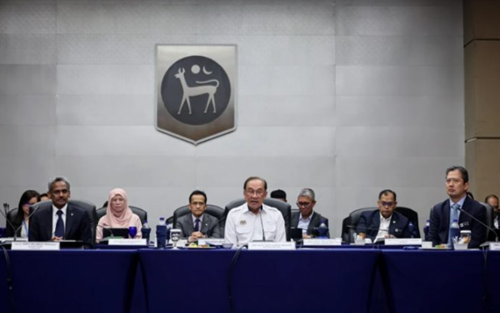
Malaysian Prime Minister Datuk Seri Anwar Ibrahim announced special facilities totalling RM5 billion to assist micro SMEs (MSMEs) under Bank Negara Malaysia (BNM) that are facing the impact of the West Asia crisis.
Anwar, who is also the Finance Minister, said this facility complements the additional RM5 additional guarantee under the Syarikat Jaminan Pembiayaan Perniagaan (SJPP) that was previously announced.
The guarantee allocation of RM5 billion under the SJPP is meant to ease the pressure on MSMEs in construction, agriculture and agri-food, logistics and transportation as well as tourism through financing coverage of up to 80% from 70% previously and a guarantee period of up to 10 years compared to seven years.
Prior to this, the government implemented e-invoice relaxation with an additional transitional period of 12 months for the implementation of Phase 4 e-invoice until 31 December 2027 for businesses with annual sales between RM1 million and RM5 million, including permission to issue consolidated e-invoices without penalty during that period.
SAMENTA Proposes Green Shift For SMEs
The Small and Medium Enterprises Association of Malaysia (SAMENTA) said the allocation would help businesses cope with rising operating costs and liquidity challenges.
“SAMENTA wishes to express its deepest appreciation and gratitude to the prime minister for the announcement of immediate measures aimed at alleviating the operational pressures faced by SMEs,” SAMENTA national president Datuk William Ng said in a statement.
Ng said the group welcomed what it described as swift action by the government, which it said had incorporated feedback from industry players.
“SAMENTA welcomes the swift action of the MADANI Government, which has acted based on direct feedback from industry players, including SAMENTA, to ensure the survival of the local business ecosystem amidst the global energy crisis.
“In particular, the RM5 billion SJPP guarantee allocation with enhanced 80% coverage and the 12-month e-invoicing transition flexibility provide critical liquidity and administrative relief,” Ng said.
He added that targeted loan restructuring efforts would be more effective than broad-based relief.
“We also support the announcement for co-operation between SJPP and banks to facilitate the targeted restructuring and rescheduling of loans to assist business cash flow. This targeted approach is a far better than a blanket loan moratorium, which would only serve to prolong loan durations and total interest payments for SMEs, including those who may not be critically impacted by the energy crisis,” he said.
At the same time, SAMENTA warned that businesses should prepare for sustained pressures rather than a short-term disruption.
“SAMENTA echoes the prime minister’s sentiment that this crisis is not a temporary situation and that we must all be prepared for prolonged, gradual changes,” Ng said.
The group called on the government to prioritise energy transition initiatives and circular economy practices to help SMEs reduce long-term costs and supply chain risks.
“As such, we propose that the government further strengthens SME resilience by focusing on energy transition and the circular economy,” he said.
Ng suggested earmarking part of the financing guarantees for renewable energy (RE) adoption.
“Beyond working capital, we propose that a portion of the SJPP guarantees be earmarked specifically for SMEs to transition to renewable energy. This includes low-interest financing for solar PV installations and energy-efficient machinery to permanently lower overheads and reduce dependency on volatile global fuel prices,” he said.
He also urged tax incentives to support circular economy initiatives, including recycling and resource-sharing programmes.
“To mitigate raw material scarcity caused by conflict-driven supply chain disruptions, the government should provide tax incentives for SMEs adopting circular economy models. This includes grants for waste-to-wealth technologies, recycling initiatives, and resource-sharing platforms to reduce reliance on imported petrochemicals and steel,” Ng said.
(Web source: https://sme.asia/malaysia-announced-additional-rm5-bil-facilities-for-msmes/)